
Quick answer
The Acropolis of Athens is famous for the Parthenon, a 5th-century BCE temple to Athena that epitomizes classical Greek architecture. Beyond the Parthenon, the site preserves the Erechtheion with its Caryatid porch, the Temple of Athena Nike, and the monumental Propylaea gateway. Together, these structures represent the height of Athenian power, artistic achievement, and the birth of democratic ideals in the ancient world.
The Parthenon was built in just nine years, yet its proportions have influenced capitol buildings, museums, and monuments on every continent. Constructed between 447 and 438 BCE under Pericles, the temple held a twelve-meter gold-and-ivory statue of Athena Parthenos, the city's patron goddess. Iktinos and Kallikrates designed the structure with subtle curves—each column swells slightly at the center, and the platform rises imperceptibly toward the middle—to counteract optical distortion and create the illusion of perfect symmetry. The frieze once wrapped the interior chamber with a 160-meter sculptural narrative of the Panathenaic procession, the festival honoring Athena. The Erechtheion stands on the northern edge of the summit, built over the legendary contest between Athena and Poseidon for the city's patronage. Its south porch features six draped female figures—Caryatids—serving as columns, each carved from a single block of marble. The temple housed the sacred olive-wood statue of Athena Polias and marks the spot where Poseidon struck the rock with his trident. The Temple of Athena Nike, a compact Ionic structure perched on a southwestern bastion, commemorates Athenian naval victories and once held a statue of wingless Victory, bound to ensure she would never leave the city. Understanding what is the Acropolis of Athens famous for requires seeing past the ruins to the citadel's layered role: religious sanctuary, treasury, political symbol, and workshop for sculptors like Phidias. The Propylaea, the grand entrance designed by Mnesicles, controlled access through five gates framed by Doric columns, setting a ceremonial threshold between the city below and the sacred precinct. Every stone was hauled up the western slope, and every sculpture was painted in vivid reds, blues, and golds—details now faded but documented in ancient accounts. The Acropolis landmarks have survived Persian destruction in 480 BCE, conversion into a Christian church and later a mosque, a Venetian bombardment in 1687 that ignited gunpowder stored in the Parthenon, and two centuries of removal and restoration. The Acropolis Museum at the southern base displays original sculptures and fragments, including five of the surviving Caryatids and sections of the Parthenon frieze, arranged to mirror their positions on the hill above. The site operates daily from 08:00 to 20:00, with entrance priced at 30 EUR per person, and early morning visits between 08:00 and 09:00 allow time to study the architectural refinements before midday crowds arrive.
“The Parthenon was built with subtle curves in every line—no surface is truly flat or straight—to correct the eye's tendency to see sag and distortion in geometric perfection.”
Why Is What Is the Acropolis of Athens Famous For? The Historical Legacy
The Acropolis of Athens owes its fame to a confluence of religious devotion, political ambition, and architectural genius that crystallized in the fifth century BCE. After Persian forces sacked the original temples in 480 BCE, the statesman Pericles launched a reconstruction program in 447 BCE that transformed the sacred rock into a monument to Athenian democracy and imperial power. The Parthenon, designed by architects Ictinus and Callicrates under the sculptor Phidias, rose over fifteen years as both a temple to Athena and a treasury for the Delian League. Its Doric columns enclosed a gold-and-ivory statue of the goddess that stood nearly twelve meters tall, funded by tribute from allied city-states. What is the acropolis of athens famous for extends beyond religious architecture to its role as a symbol of Western civilization itself. The Propylaea gateway, completed in 432 BCE by Mnesicles, introduced visitors to the sanctuary through marble colonnades that merged Doric and Ionic orders. The Erechtheion, finished in 406 BCE, honored multiple deities on the site where Athena and Poseidon competed for Athens's patronage, its southern porch supported by six caryatid columns carved as draped maidens. These structures survived conversion to a Christian basilica in the sixth century CE, Ottoman fortification in the fifteenth century, and Venetian bombardment in 1687 that detonated gunpowder stored inside the Parthenon. Today's visitors encounter these monuments as archaeological survivors rather than intact temples. The Parthenon's sculptural program—metopes depicting mythological battles, a frieze showing the Panathenaic procession—now resides largely in the British Museum and the Acropolis Museum, while the temple itself stands as a marble skeleton against the Attic sky. The Erechtheion's original caryatids have been replaced by copies, the originals preserved indoors. Yet the site remains what the acropolis of Athens was famous for in antiquity: a hilltop where religious ritual, civic identity, and artistic achievement merged into a landscape that defined an empire and outlasted it. Walking the marble pathways worn by twenty-six centuries of pilgrims, modern travelers trace the same ascent that ancient Athenians made during festivals honoring their patron goddess.
Persian forces destroy the original Archaic temples during Xerxes's invasion of Greece
Pericles initiates construction of the Parthenon under architects Ictinus and Callicrates
Phidias completes the chryselephantine statue of Athena Parthenos inside the temple
The Propylaea monumental gateway is finished, designed by architect Mnesicles
The Erechtheion temple is completed with its iconic caryatid porch
The Parthenon is converted into a Christian church dedicated to the Virgin Mary
Venetian artillery ignites Ottoman gunpowder stores, destroying much of the Parthenon's interior
The Greek government begins the ongoing restoration project to stabilize and preserve the monuments
Key Structures That Define What Is the Acropolis of Athens Famous For
The Acropolis is defined by several classical structures that demonstrate the architectural precision of the 5th century BCE. These buildings remain the primary reason the site is recognized as a center of ancient Greek civilization.
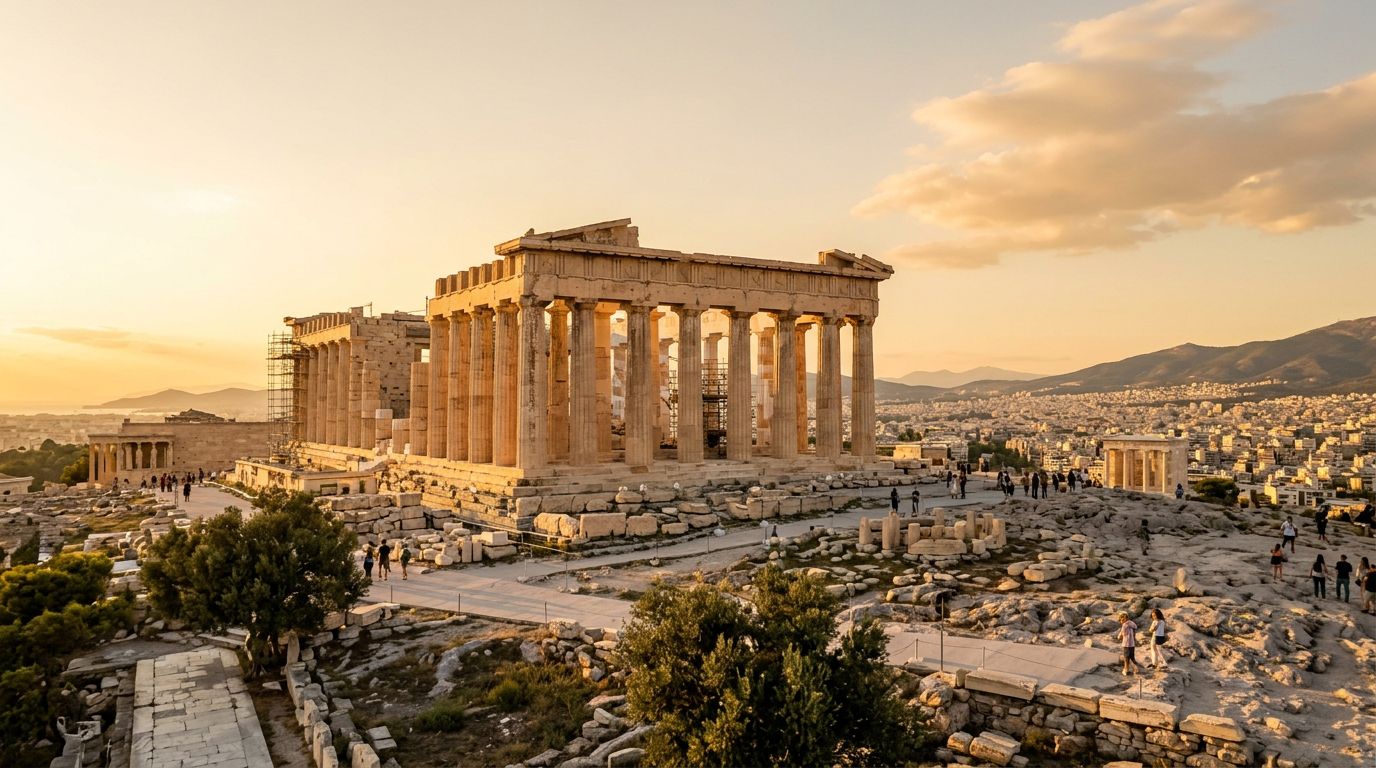
Parthenon
The central temple dedicated to the goddess Athena, constructed from Pentelic marble. It is known for its refined optical corrections and doric columns.
View from the south side to appreciate the massive scale.
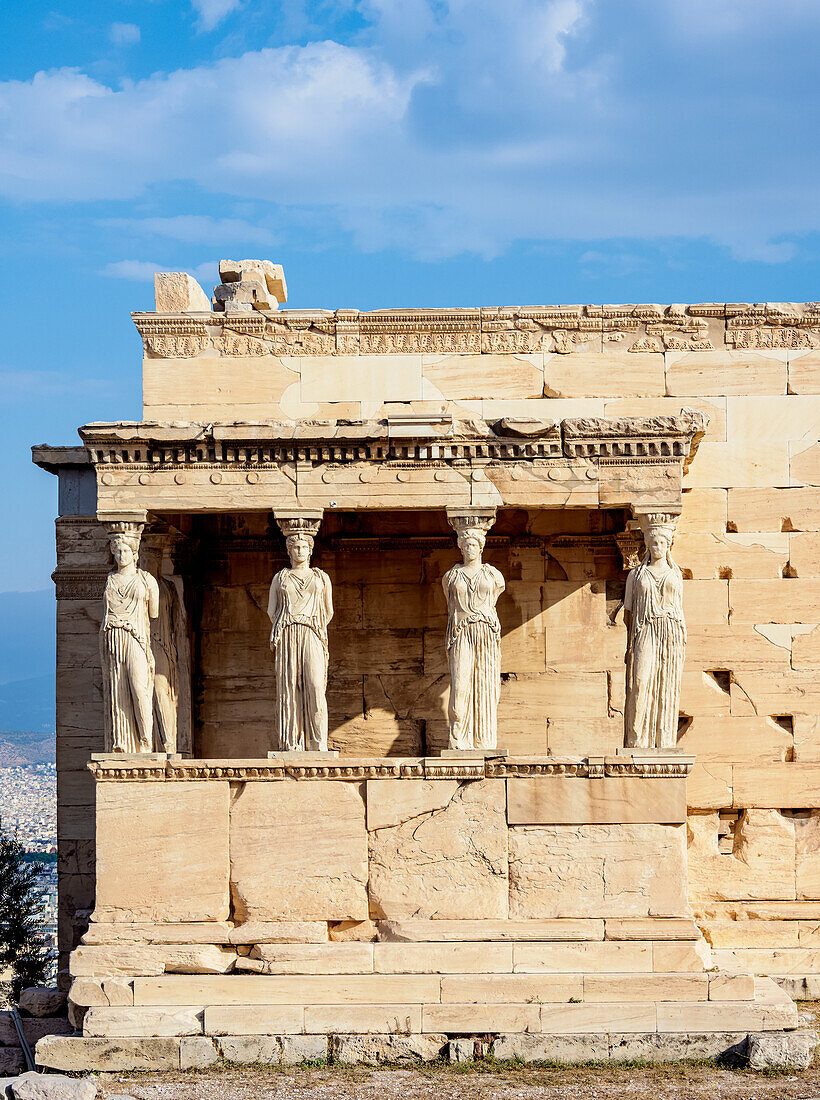
Erechtheion
An intricate temple featuring the Porch of the Maidens, where six draped female figures serve as supporting columns. It is located on the most sacred part of the rock.
Observe the Caryatids closely from the wooden walkway.
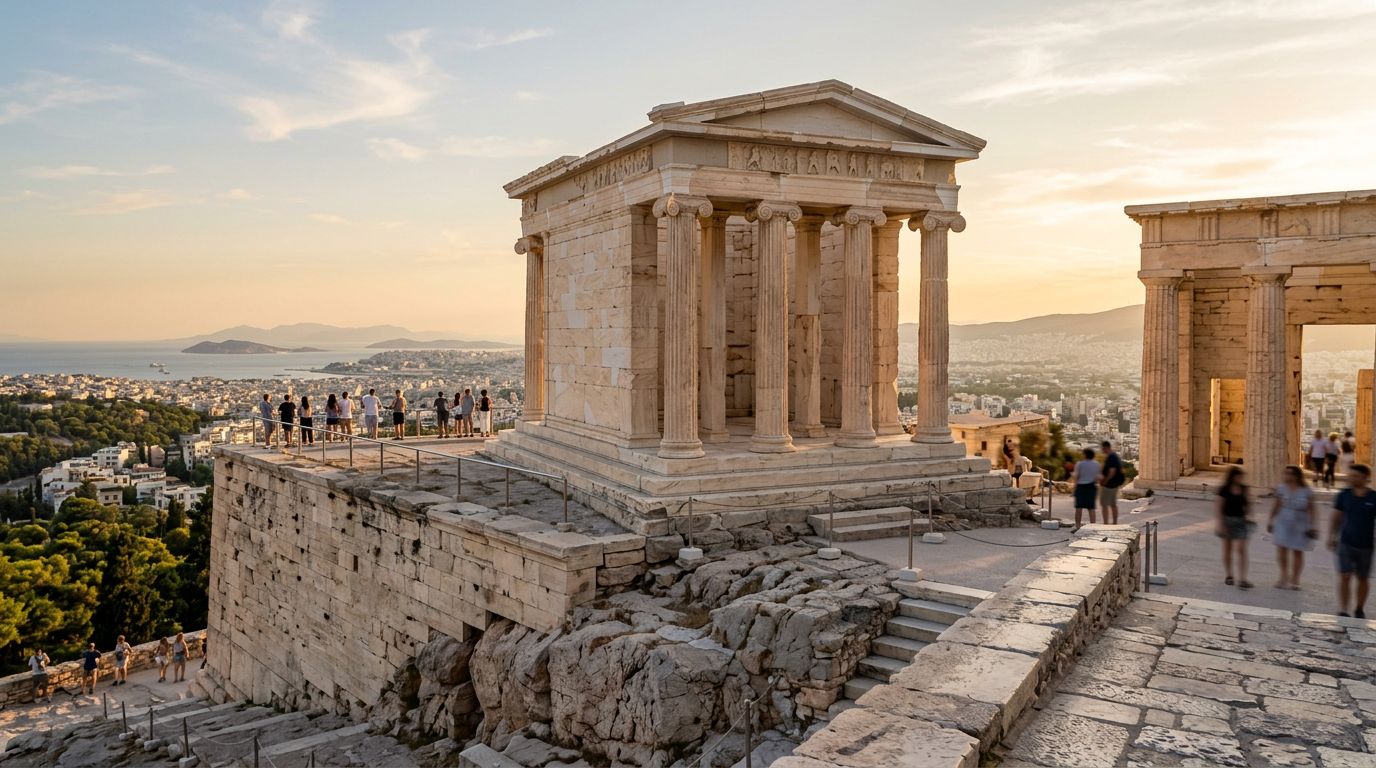
Temple of Athena Nike
A compact, ionic temple positioned on a projecting bastion. It celebrates the victory of the city and offers views over the approach to the site.
View from the Propylaea steps for the best angle.
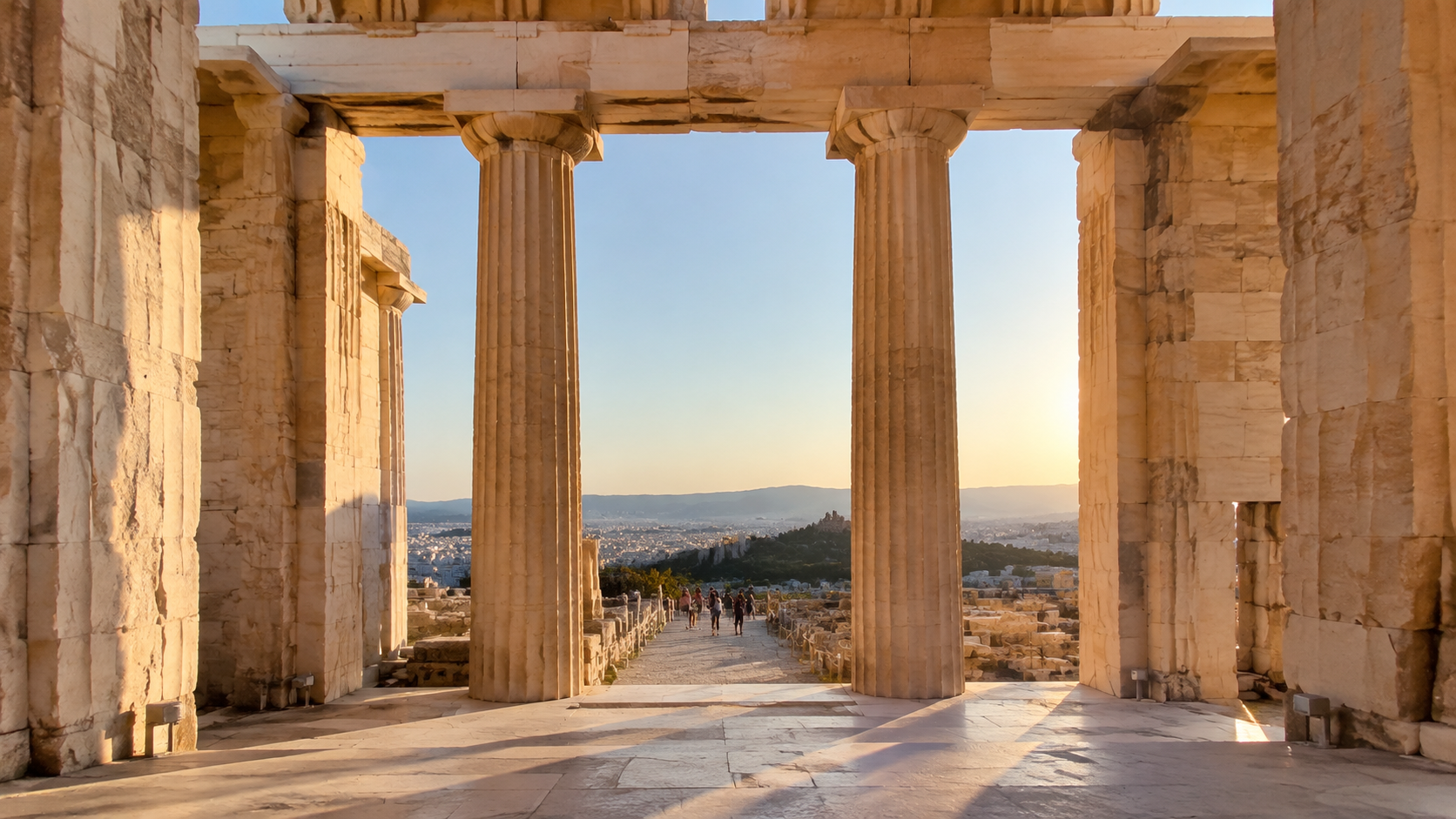
Propylaea
The monumental gateway designed to serve as the grand entrance to the sanctuary. It utilizes a combination of doric and ionic architectural orders.
Walk through the central corridor to experience the transition.
Timing Your Visit: What Is the Acropolis of Athens Famous For in Terms of Crowds?
The best arrival window for the Acropolis is 08:00–09:00. Arriving at this time allows visitors to experience the site before the arrival of large cruise ship groups and the intensity of the midday heat.
April to May
Moderate crowdsMild, 18–25°C
Spring offers comfortable temperatures before the summer heat rises. Early entry is essential during these popular months.
June to August
Very high crowdsHot, 30–35°C
High temperatures and peak tourist volumes make early morning visits necessary. Access the site at 08:00 to mitigate heat exposure.
September to October
Moderate crowdsWarm, 20–28°C
The weather cools down while visitor numbers remain steady. Aim for the 08:00–09:00 window to ensure a quieter experience.
Weekday mornings
Low to moderate—
Midweek visits generally see fewer independent travelers compared to weekends. Arriving at 08:00 consistently provides the most manageable conditions.
Verdict: The optimal time for a visit is Tuesday to Thursday, arriving at the 08:00 gate opening during the months of April or October.
Operating Hours for What Is the Acropolis of Athens Famous For
The Acropolis of Athens is open daily to visitors throughout the week. Guests may plan their visit according to the following schedule.
| Monday | 08:00–20:00 | |
|---|---|---|
| Tuesday | 08:00–20:00 | |
| Wednesday | 08:00–20:00 | |
| Thursday | 08:00–20:00 | |
| Friday | 08:00–20:00 | |
| Saturday | 08:00–20:00 | |
| Sunday | 08:00–20:00 |
Navigating to What Is the Acropolis of Athens Famous For
The Acropolis is located at Athens 105 58, Greece. The most efficient way to access the site is via the pedestrian network connecting the historic neighborhoods of Plaka and Makrygianni to the main entrance.
Line 2 (Red Line) to Akropoli Station
From Syntagma Square via Dionysiou Areopagitou
Drop-off at Dionysiou Areopagitou pedestrian street
Check availability
Common Questions: What is the Acropolis of Athens famous for
Everything you need to know about what is the acropolis of athens famous for